
Journal
April 12, 2026
Intensely Red
David Henning Larson's palette was, generally speaking, fairly restrained. But from time to time he would use areas of intense color, particularly red, for dramatic affect. Red is by nature a color that immediately draws the eye to it. Psychologist say we're hardwired to respond to red, as it evokes strong feelings ranging from danger to passion. The fact that blood is red certainly plays an instinctive part in our response, but it isn't the only reason. Below are some examples of my father's work where a strong use of red stands out.
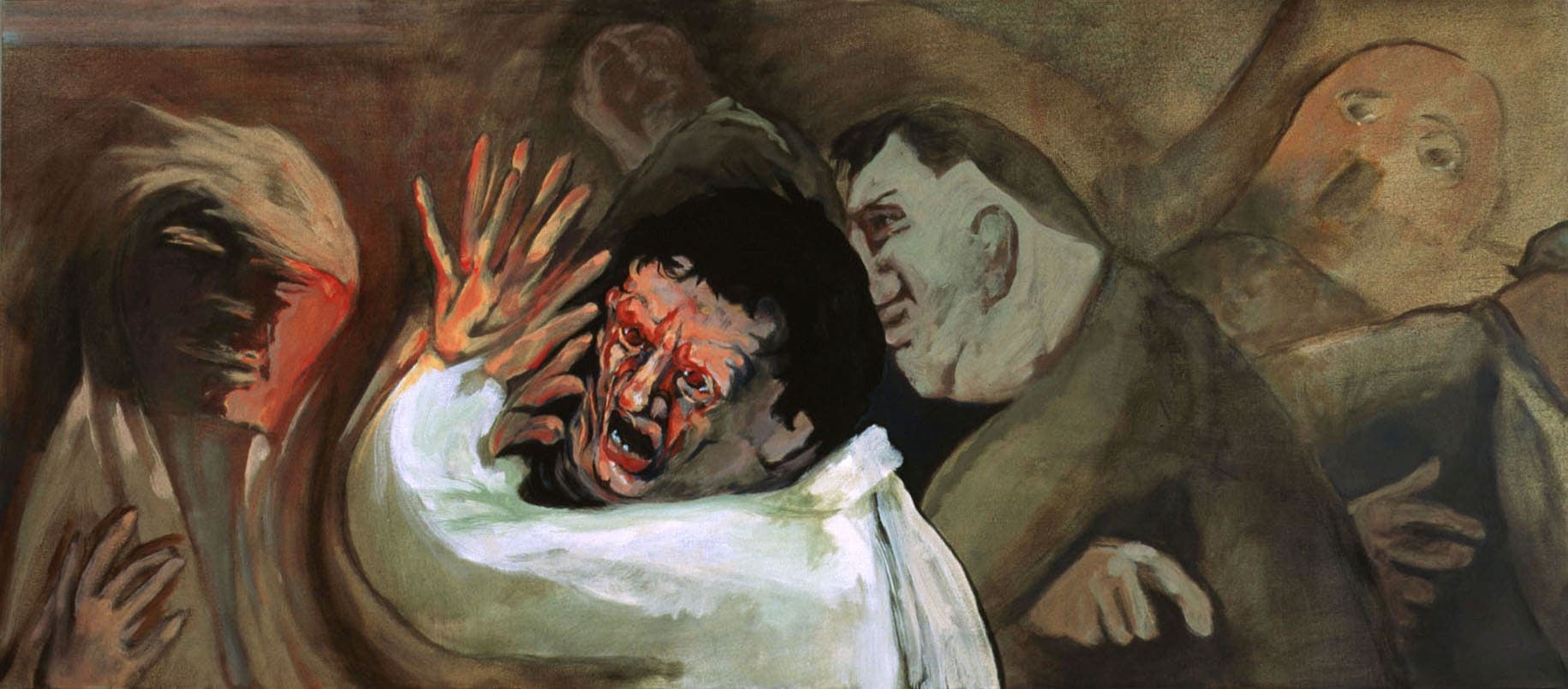
Slap. Oil on canvas (click on image to enlarge)
The painting 'Slap' from the mid 90's is a great place to start as it's probably the most dramatic example. The area of intense red immediately attracts our eye. It not only highlights the intense anger of the aggressor, but also enhances the violence of the slapping act. The red of anger is then carried over to the victim and becomes the red of pain. At first I was a little put off by the theatricality of the red in this painting but I've grown to admire the work immensely.
In the multi-panel work 'The Millennium', from 1997, red is also used to highlight violence, in this case the violence in thousands of years of human history, steamrolling to our time and culminating in the tragic death toll of the 20th Century.
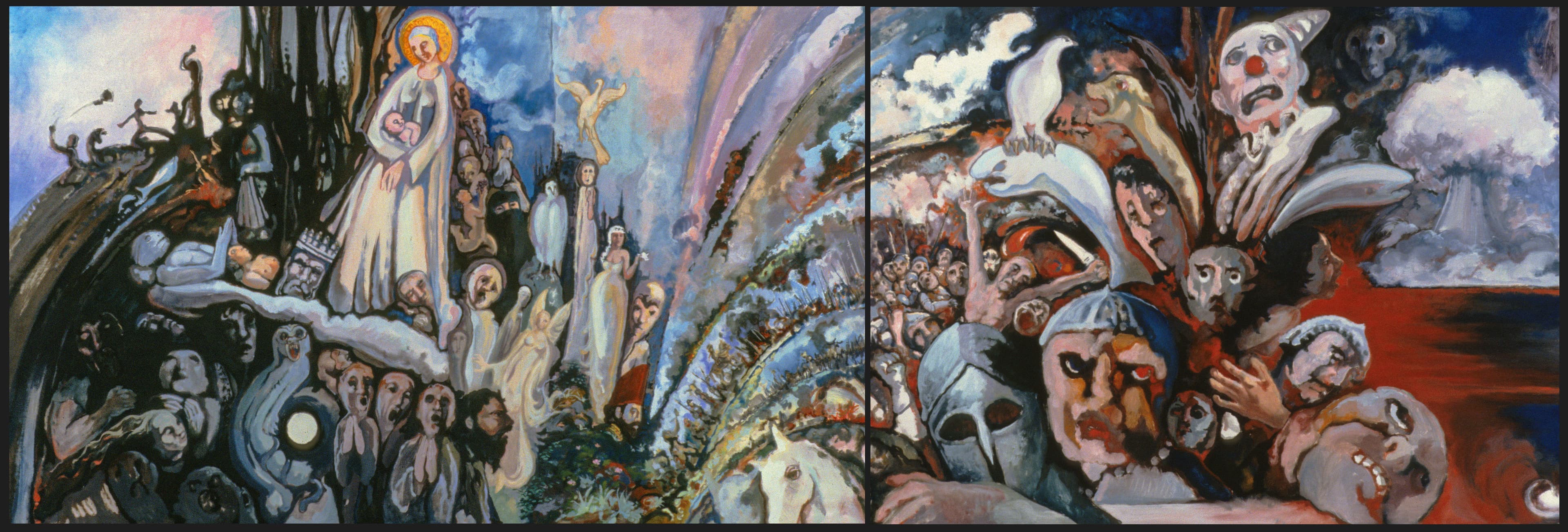
The Millennium (Combined). Oil on panel (click on image to enlarge)
If you focus in on the right panel of this work, you can see how dramatic the use of red is. It is literally the bloodbath of the 20th century, with its two world wars and brutal ethnic conflicts. At least this how I interpret it.
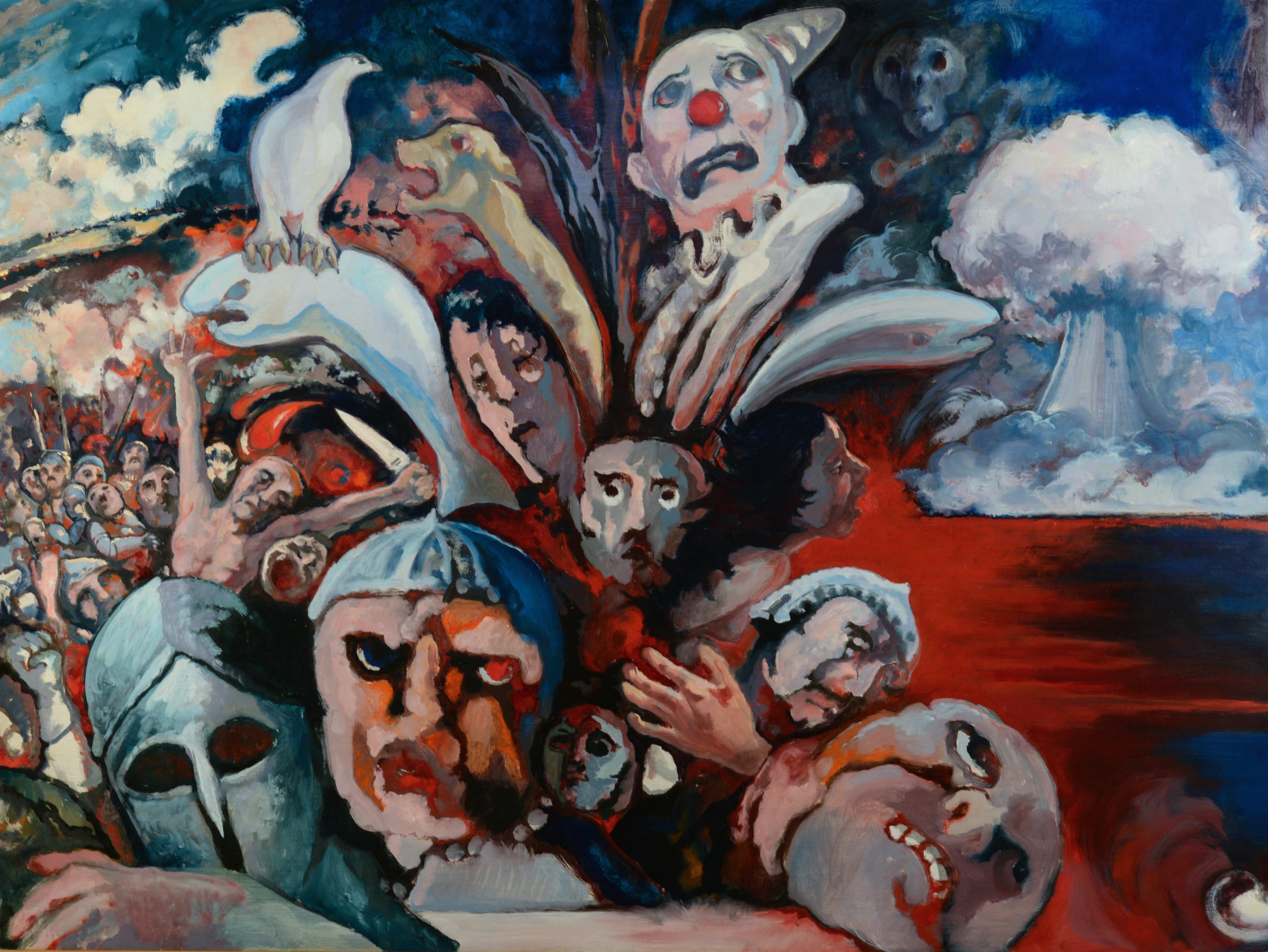
The Millennium (Right Panel) Oil on panel
The mushroom cloud supplies the period, or carriage return to our recorded history - but what will the future bring? Even the clown is scared. Not a good sign.
Red is used more subtly in a few works from my father's Moby Dick series.
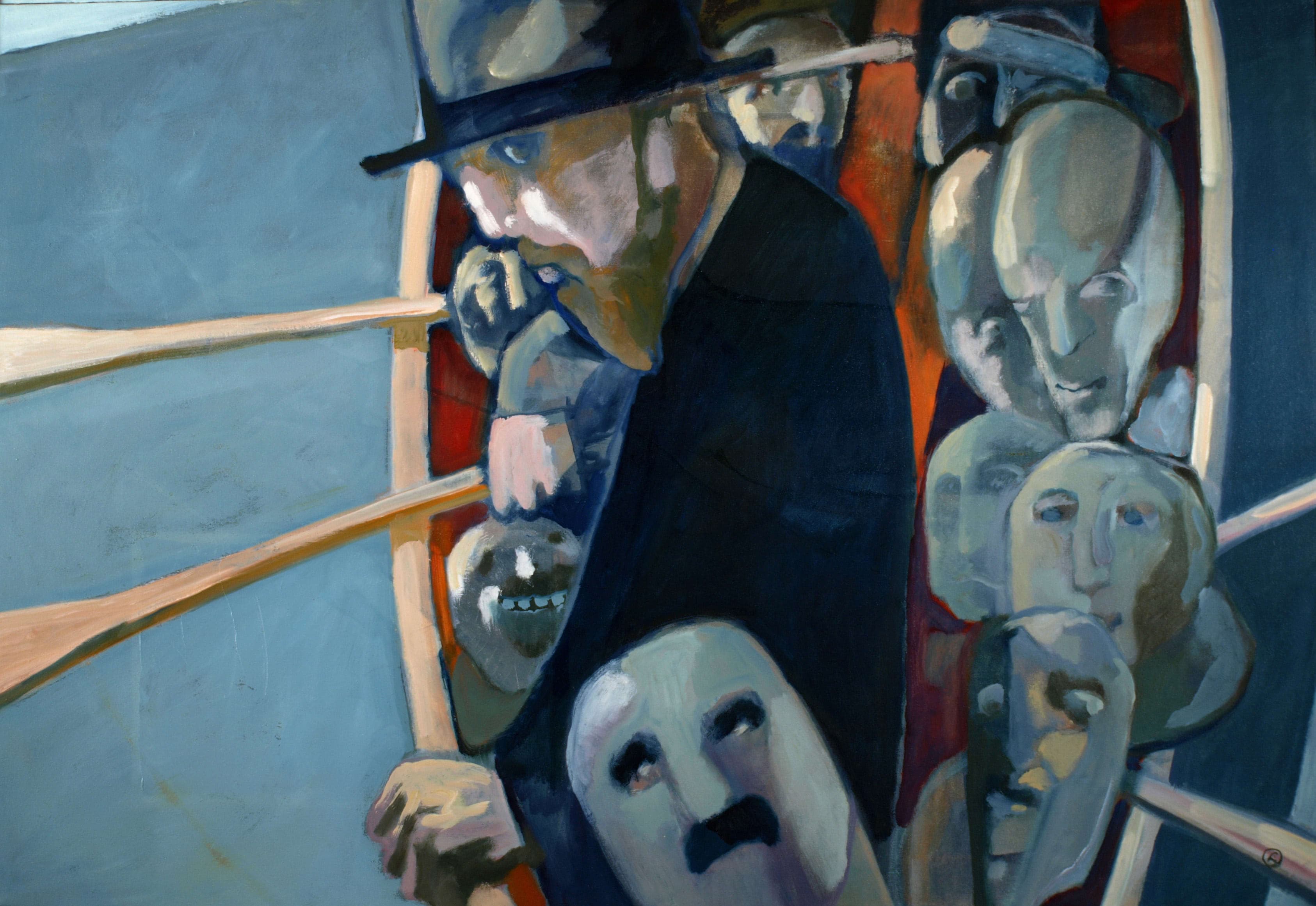
Open Boat. Oil on canvas
In the powerful work called 'Open Boat, the red in the bottom of the boat, in my opinion, foretells of the impending tragic nature of the voyage and the fate of the crew.
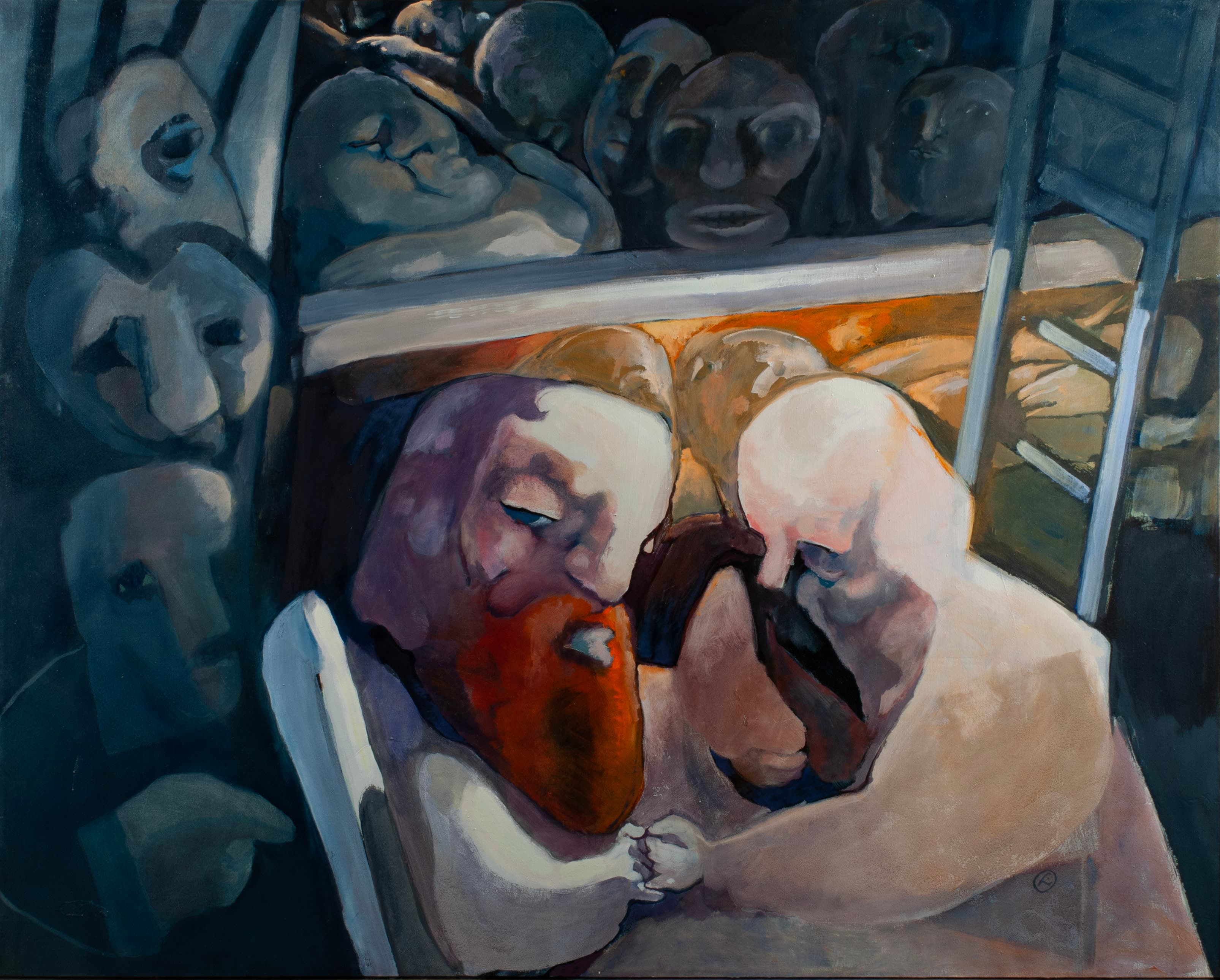
In the Hold. Oil on canvas
In another work from the Moby Dick series, the red beard in this painting called 'In the Hold' draws our eye to the this central dominant figure and adds an aesthetic and psychological richness to him and to the painting. I'm not sure red here is used for any reason other than for painterly purposes.
It's hard to think of a story more tragic than the Last Supper. The red runs through David's 'The Enlightenment Lament' like a river.
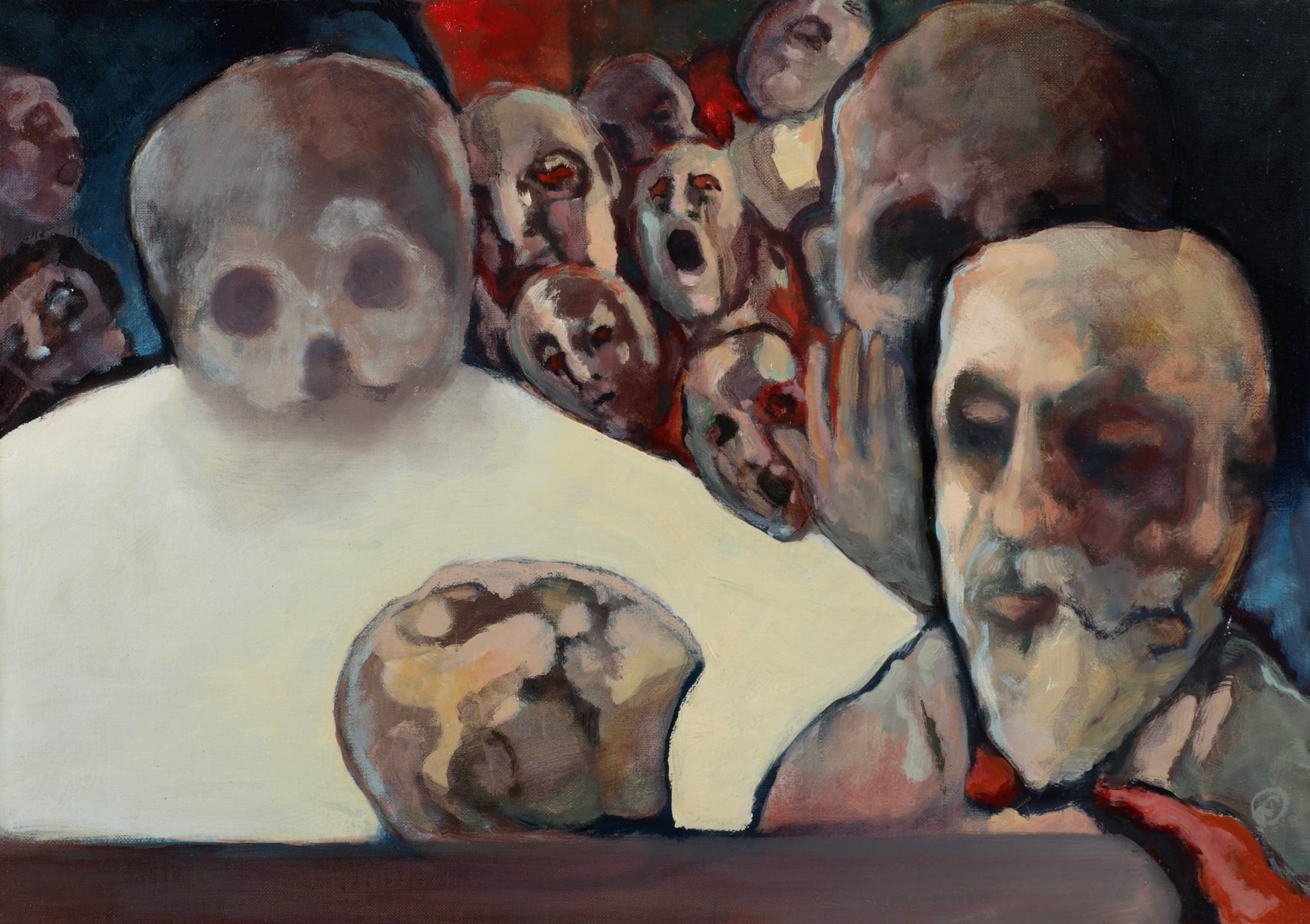
The Enlightement Lament. Oil on canvas (click on image to enlarge)
It literally flows down the picture, running off the frame at the bottom. The skull in the middle of the painting adds to this tragic tone as well.
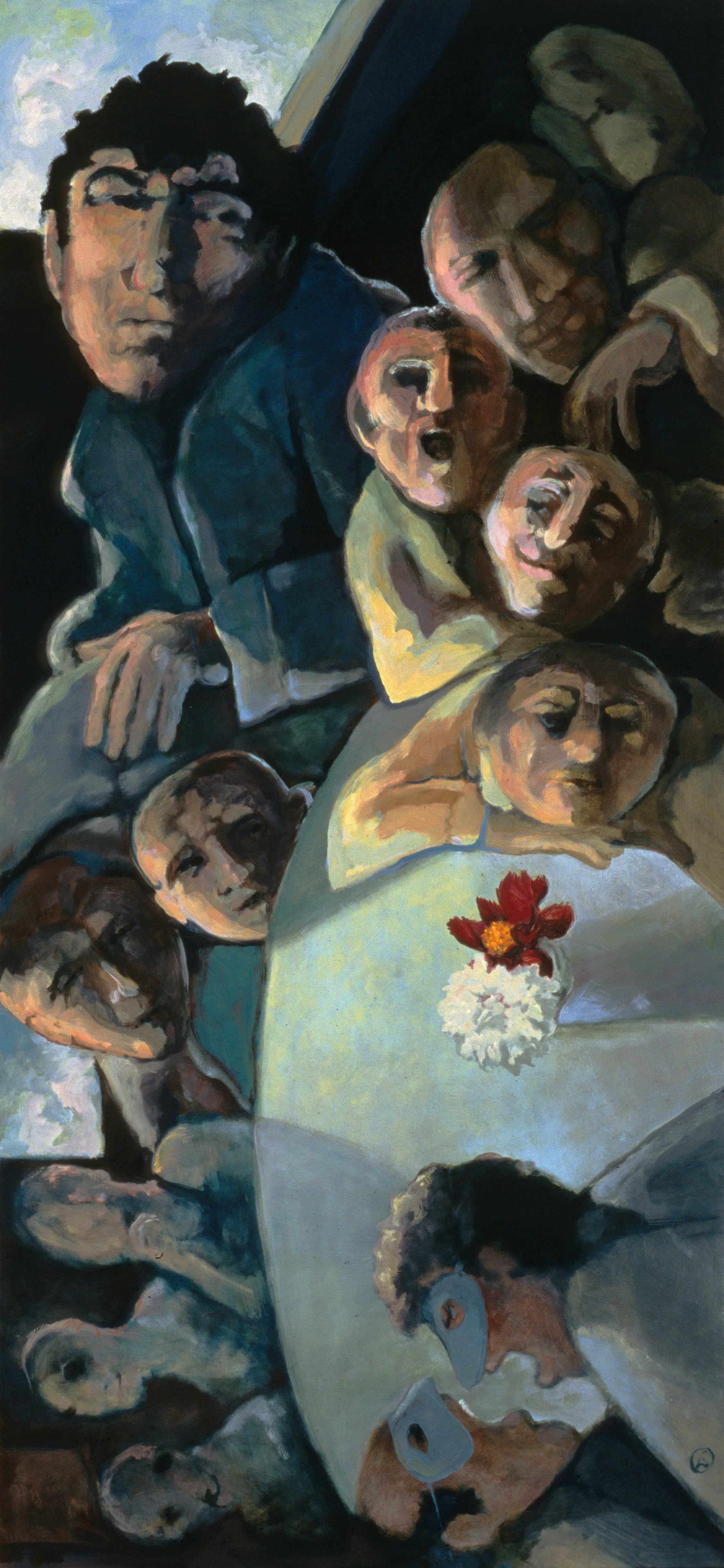
Last Supper with Two Flowers. Oil on panel
In this wonderful painting from David's Last Supper series, called 'Last Supper with Two Flowers,' red is used sparingly but very effectively. In David's later Last Supper paintings, flowers, or groups of flowers, have replaced the traditional bread and wine as the object of attention. In this work the red flower is paired with a white one emphasizes and enhances the strength of the red flower. I think it might be too much to read into the red flower any tragic significance, but it certainly draws our attention to it, and that I think that mirrors the role it plays for the characters in the painting - it becomes an object of desire, something to be coveted.
In the following two late works by David, the use of red speaks for itself.
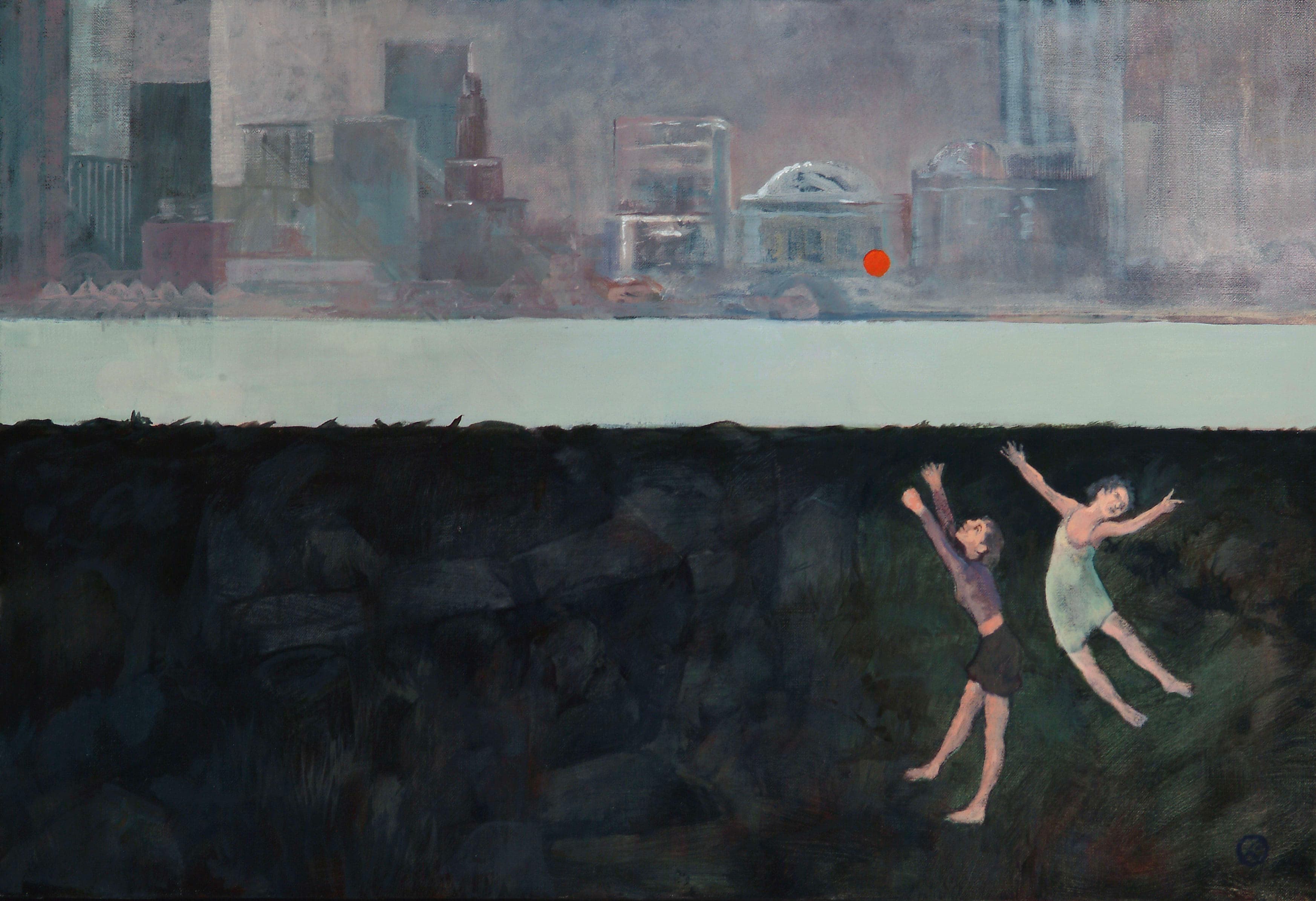
Children Playing with Red Ball. Oil on panel (click on image to enlarge)
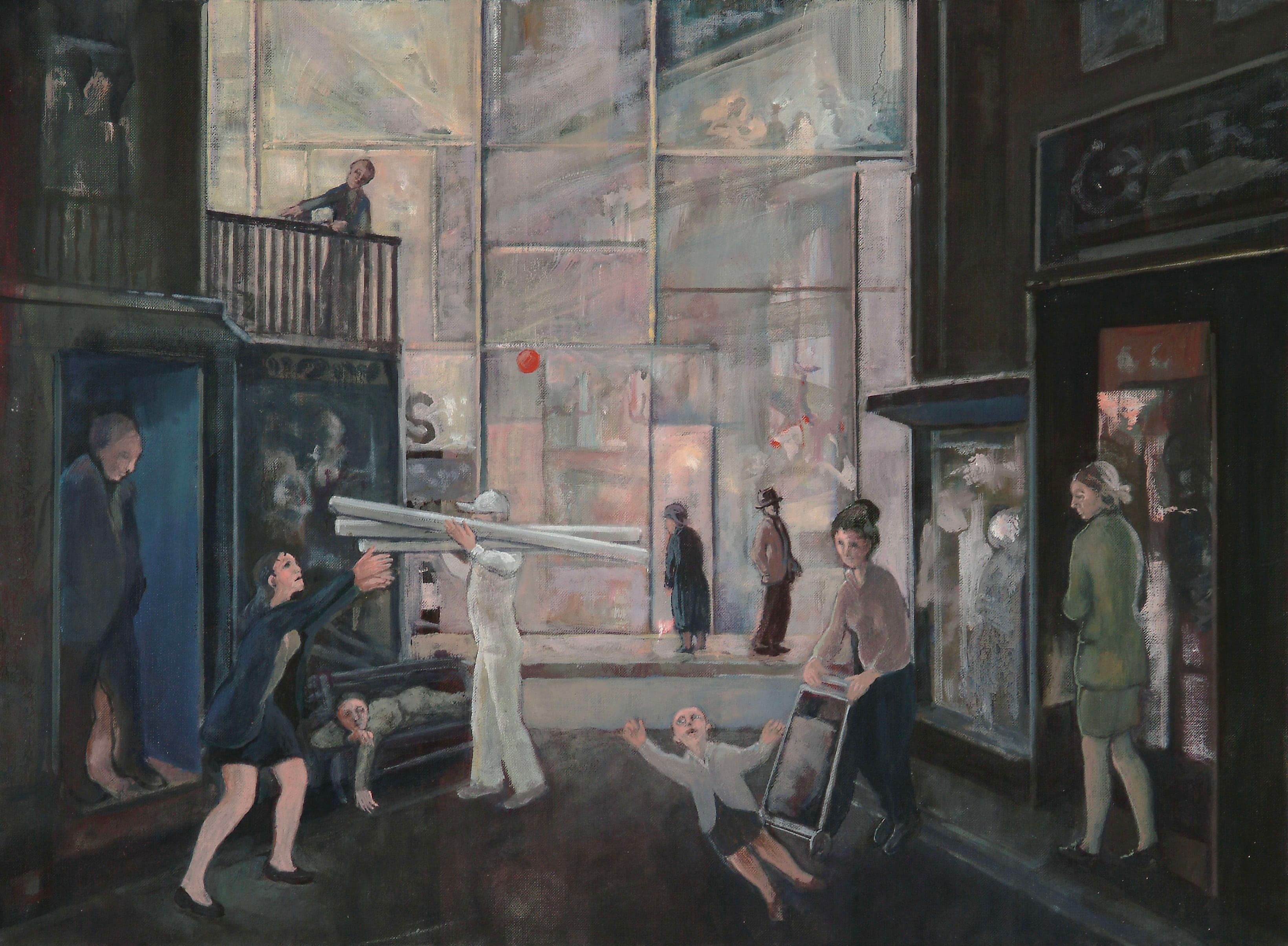
The Neighborhood, The Street. Oil on canvas (click on image to enlarge)
In both of these works, children are playing with a ball that is red. I think in both cases red is used simply to attract our attention to the object of their playful attention. Would we read these works differently if the ball was a different color, say blue or green? I think both works would have a significantly different tone and feeling.
In the following two works red dominates in an overall way.
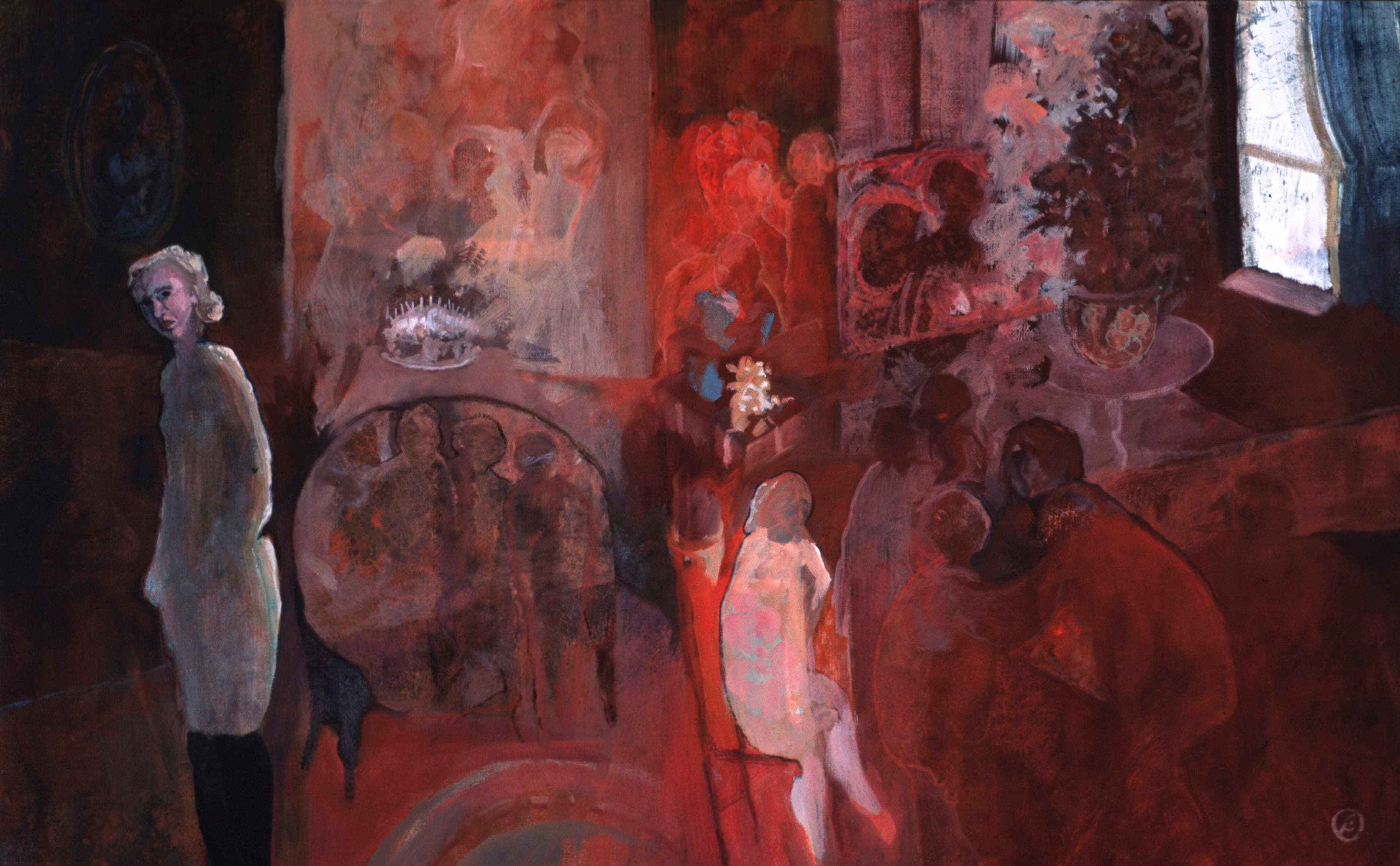
Birthday Party. Oil on canvas
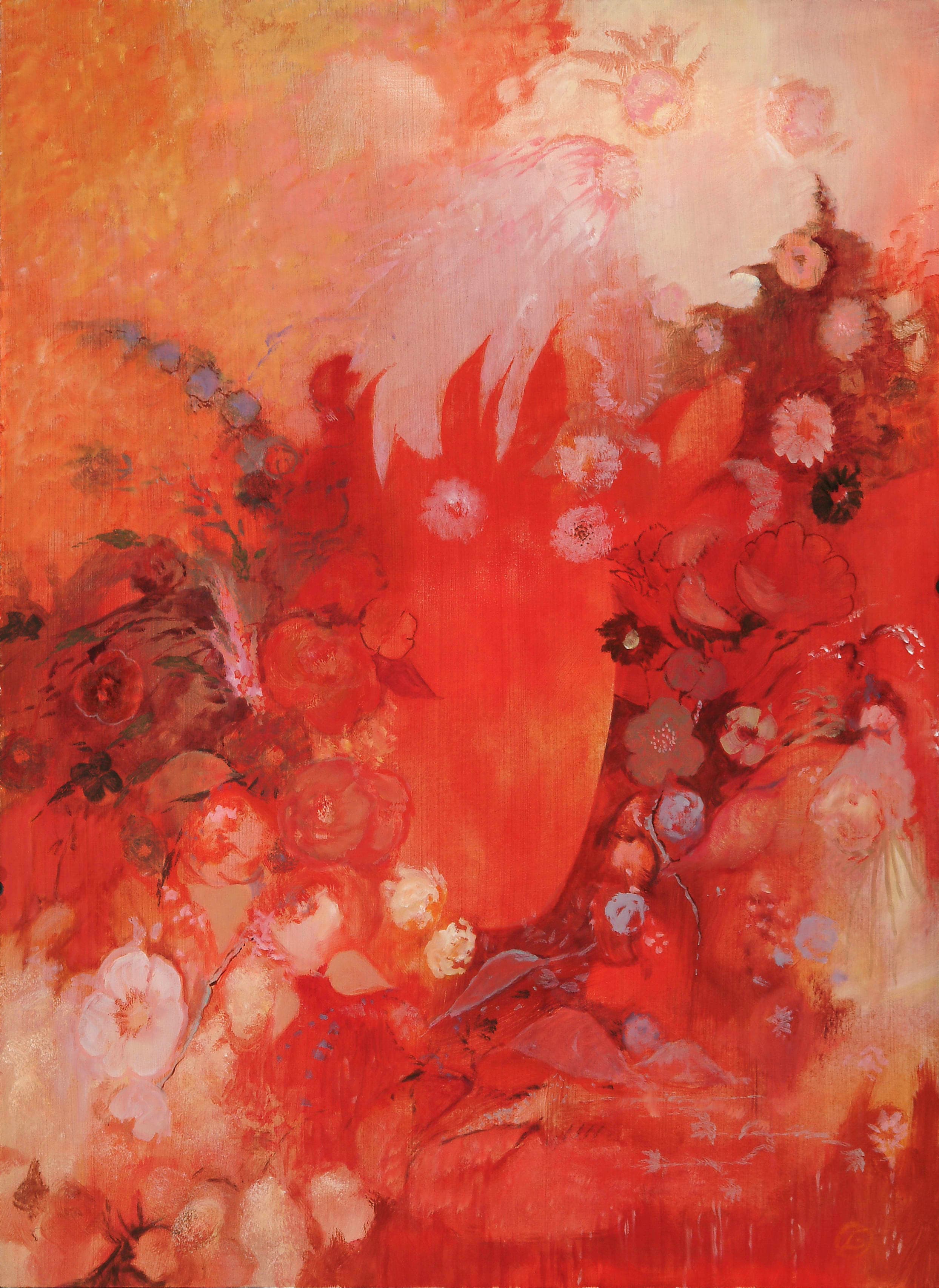
Red Vase. Oil on panel
I don't think there is anything symbolic to draw from the use of red here, it's just David having fun with the color and the subtle play of it off different hues. Both of these works seem to me orchestral in scope, with gradations of color performing their parts in the larger symphonic whole - SL